Sondra Cuban © 2023
This post focuses on bridging my two studies of Mongolian women and their internal migration within Mongolia and their intraregional migration to South Korea. These studies connect both types of migrations to women’s spatial mobility in a “golden urban age” that carries certain advantages (see, Chant, 2013). Despite the many inequalities of urban life, migrant women leverage their gender and nationality within Northeast Asian global cities to develop the region, themselves, and their families’ livelihoods. Mongolian women’s stories are a case in point.

I observed a step migration pattern for Mongolian women and their families moving from the countryside to capital cities, in this case, Ulaanbaatar and Seoul. Migration researchers (Paul, 2011) have documented how individual migrants have been “working their way up a hierarchy of destination countries” gradually for the purpose of work, studies, and livelihoods.
As an example, one young participant in Seoul who was born and raised in Ulaanbaatar by a single mother described her migration as part of a stepwise transition upward with South Korea as a transit zone for her and her husband, who was “also from a developing country.” She mapped out her situation which consisted of onward moves to western countries:
“In Mongolia we are developing step-by-step but not like Korea…We will stay in Korea, that’s the 5-year plan…[the question is] if we can still fit in to Korean society or should we move? Then we will feel nomadic. If we move to Canada, we will have to survive…we were looking forward to Australia and did the research—my husband speaks French, English, Korean. There are more opportunities in Canada”
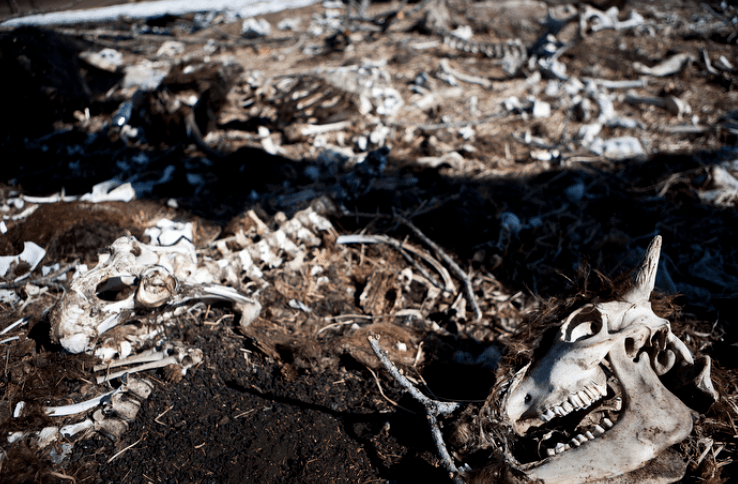
Since the 19c step migration focused on people inching closer and closer to urban areas in short-distances in their own countries, first from remote settlements, or hamlets, that they were born and raised in to towns and then to cities—which expand to accommodate waves of growth, but also lead to overcrowding with the need for onward migration. In Mongolia, bags and sums confer these village and county boundaries. This movement, along with land owning legislation enabled Mongolians from the 1990s to move to more urban areas. .One woman’s story, Tsolmon reflects this pattern. As a young girl she went to a village school and then as an older teen moved to help her grandmother who was a herder. It was here that she met her husband, also a herder. In 2001 there was a dzud (an environmental crisis consisting of dry summers followed by severe frozen winters that killed the herds). After losing their livelihoods, her and her husband moved to Ulaanbaatar to start a new life, with her grandmother following her. Her ultimate dream was to live in South Korea where her brother lives. He told her she could “find work easily there and get rich.”
Although these smaller movements within Mongolia are not normally viewed as migratory in and of themselves, I examine them as part of a larger pattern of rural-to-urban migration. I show that Mongolian women, over a lifetime, are moving to places that are more densely populated and urbanized for better livelihoods. They move with or, before or after family members in a chain of family labor migration, to larger and larger urbanized areas, and from there, to metropolises like Seoul, while other members stay behind. This is happening despite government policies to reward internal migrants for returning to the countryside. Or on the other hand, restricting registration for permanent residency in Ulaanbaatar. The drive for daughters to migrate for education in particular to Mongolia’s cities is strong, and because of the large family structure and dispersed networks, they can maintain a sense of being united despite the distances. Over time I discovered that participants and their families were moving closer to urban centers especially Ulaanbaatar which is a school and work magnet for Mongolians across the country.
This IOM employment report on internal migration (2021) surveyed migrants and found a similar pattern to my study:

My study traces 60 Mongolian women’s migrations, not only through rural and urban geographies, but across generations and over time. Families, both nearby and afar, embed members and anchor one another in a type of chain of relations that propel their migrations as part of a progression of movements to cities to secure greater livelihoods (Grzymala‐Kazlowska & Ryan, 2022).

Along with chain migration comes additional social, cultural, environmental and engendered changes that are important, which are part of a lifespan perspective on migrants, for example, the period of time when young women leave the countryside and their motivations and decisions for moving to larger and larger places in young adulthood and then into middle-age. My research did in fact take a life history approach of inquiring about family situations including where they were raised as well as the livelihoods of their parents, and their pathways into adulthood.
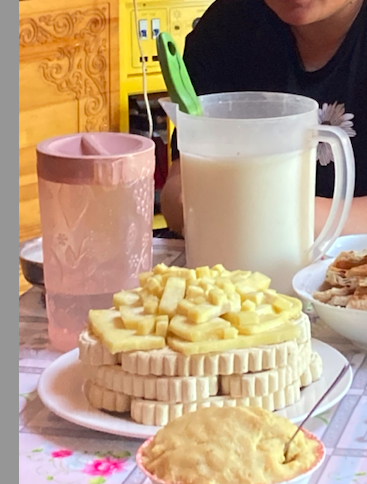
Milk and cheese is an important gendered work for herding women and can be taken anywhere. Milk and milk products have special significance in Mongolian culture, including for eating, drinking, and using for good luck when traveling. All travelers and guests are given cheese when they enter gers and I carried milk with me to interviews in Korea to give to participants
Among the 60 participants, there was an intergenerational shift of Mongolians moving from the countryside to the capital city, Ulaanbaatar, and then from there to a nearby and popular destination in the region, South Korea.[1] With a dispersal strategy of family members across two or more countries, such as this, families and households could survive the difficulties of a lack of infrastructural state support and a neoliberal economic system that failed to buffer the shocks of the market on individual and family life in Mongolia. And the center of most of supports in Mongolian society is based within the family unit.
[1] While I did not shadow single participants moving from the countryside to the capital city and then onward to Korea’s capital, and separated them into two cohort samples, one internal and the other intraregional, I could still make comparisons across the two groups as they and their families moved towards an urban existence.
Family resources, accumulating over time through different and dispersed family members and their networks across Mongolia and in other parts of the world (including South Korea), fueled this sample’s human capital, driving them from Mongolia to South Korea to acquire more capital, pay off debts, and setting in place aspirations to continue to move homes. It was clear they had a more positive view of globalization on their lives, in terms of improving their education, career opportunities, life capacities, and which has also been found in other studies of Mongolians (see, for example Horne & Davaadorj, 2021). But it wasn’t a simple formula. While the two samples differed in these respects, in other ways, they were not so very different from one another. For example, the younger women in both samples were similar, especially with regard to their educational capital and aspirations.
Mongolian women, in many respects fit the definition of “aspiring migrants” who “imagine futures away from home.” (Bal & Willems, 2014). By this, they “aspire to have the best of both worlds by combining local realities with global possibilities.” In this case, Mongolian women move to cities and metropolises to enlarge their scope of opportunities. While aspirational migration is considered to be an economic response, intrinsic qualities such as self-care and self-development also play roles and many participants expressed that they had developed maturity, cosmopolitan attitudes and multicultural outlooks and competence in dealing with diversity. And while normally aspirational migration is associated with high skilled migrants, those with less education also expressed similar motivations and sentiments. One internal migrant for example, with a high school education was originally from Altai city in the Govi Altai province and had lived in Ulaanbaatar since school age. Her aunt gave her a folktale book to bring with her, and she in turn gave this book to her niece telling her that it “says everything. You understand the world. The book teaches us everything.” In this way, according to Dr. Shurla Thibou (pc, 2023), she was “paying it forward.”

She was currently saving to study in South Korea and planned to go because of the “good universities.” But there were other factors that she took into account, especially her gender and race. She subscribed to Mongolian women youtubers in South Korea that influenced her thinking about where to study and live. When comparing alternative destinations, she reflected that in Korea:
“they will accept me as an Asian woman. If I go to American or European countries, they would say, ‘oh she’s an Asian woman.’ Because of COVID 19, they don’t like Asian women—it’s scary to study in western countries. I prefer Korea.”
It has been shown that living in an urban area increases global information flows and therefore influences aspirational migration. In one study those participants who were residing in Ulaanbaatar were more attuned to social media and information flows from around the world, including being conscious of the ways that Mongolia was covered in the press (Horne & Davaadorj, 2021). Yet it goes without saying that while this may be true across the board, rural families in Mongolia were also attuned to globalization pressures. In my study, for example, the herding families I spoke with were well aware of issues associated with migrating to Ulaanbaatar and they discussed the importance of sending their daughters there to get a higher education. In one case, a young university Law school graduate had herding parents who supported her through her studies. She said:
“They supported me. ‘The girls have to study at university, to get a major to prepare. It’s much better for your future life’…. My parents are thinking now it’s a kind of problem— most of the herders, they have too many cattle— the field is crowded and not enough fields, 17 million cattle and 3 million people—too many people. Looking after animals is a hard job. My parents think so. Girls have to study in university and work…”
None of the participants saw their futures in rural areas. While some participants thought they might return to their communities to ‘give back’, with small businesses that could contribute capital, this could only happen after they had acquired large amounts of resources to move there. For the most part every participant saw themselves as struggling to earn their own way in the world, as individuals and as part of a family unit, rather than as part of a national collective goal. These aspirations embodied neoliberal goals that were embedded within the current Mongolian economy and society (as well as in the global economy), and they were also internalized as inherent to Mongolian cultural mobility, for example with the idea of the ‘camp’ that accompanied histories of displacement (see for example, Myadar, 2021)

For these participants the city was a ‘passport’ to a better life and a place of dreams, like this participant who was a tour guide and showed me the inside of her suitcase.
The next several posts will focus on the precious objects that participants brought on their stepwise journeys to urban centers, as well as their communication within their transnational family members and compatriots, the educational drivers in their lives, in addition to the role of climate change.
 sondracuban.wordpress.com
Leave a comment